
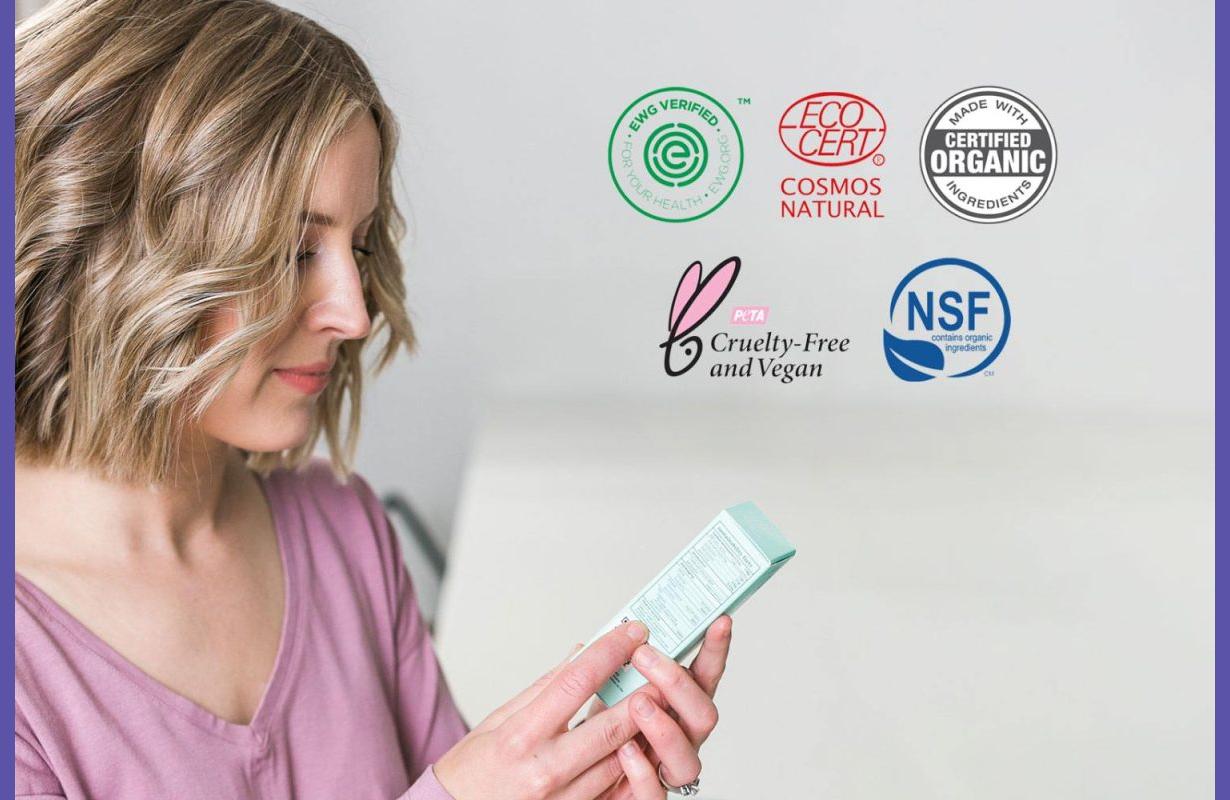
Clean beauty products have become increasingly popular, yet many shoppers struggle to understand what the various certifications actually mean. When searching for genuine clean beauty products, you need to know which labels to trust and how each certification impacts the safety and sustainability of your skincare choices. This guide will help you navigate the confusing world of clean beauty certifications and apply that knowledge to choosing the perfect clean beauty moisturizer for your needs.[source 1]
⭐ What We’ll Discover
What Does “Clean Beauty” Actually Mean?
The term “clean beauty” lacks standardized regulation in most markets, making it essentially a marketing term that brands can use with minimal oversight. Without legally binding definitions, clean beauty can mean different things to different companies.[source 2] [source 3]
This is precisely why third-party certifications have become so important. They provide independent verification against specific, measurable standards rather than vague marketing claims.[source 4]
Clean beauty products generally claim to offer:
-
Products free from potentially harmful ingredients -
Sustainable and ethical sourcing practices -
Transparent formulation and manufacturing processes
However, achieving all three simultaneously is challenging, and different certifications prioritize different aspects of “clean beauty.” Understanding what each certification actually covers helps you make informed decisions based on your personal priorities.[source 5]
Major Clean Beauty Certifications Decoded
1
EWG Verified: The Non-Toxic Safety Standard
EWG Verified products meet the Environmental Working Group’s strict standards for ingredient safety. Products with this certification:
-
Avoid ingredients on EWG’s “Unacceptable” list based on peer-reviewed research -
Provide complete ingredient transparency, including fragrance components -
Follow good manufacturing practices
EWG verified products focus primarily on human health and safety rather than sustainability or ethical sourcing. The certification doesn’t guarantee that a product is organic, natural, or cruelty-free—only that it avoids specific potentially harmful substances[source 6] [source 7]
2
USDA Organic Certification: The Agricultural Standard
The USDA organic certification applies to agricultural ingredients in beauty products, such as plant oils, butters, and extracts. For a product to carry this seal:
-
At least 95% of ingredients must be certified organic by weight -
The remaining 5% can include approved non-organic ingredients -
No synthetic pesticides, fertilizers, GMOs, or ionizing radiation in production
USDA organic certification doesn’t address non-agricultural ingredients, manufacturing sustainability, or packaging materials. A product can be USDA organic and still contain synthetic preservatives or thickeners in that remaining 5%[source 8] [source 9]
3
ECOCERT Natural Standards: The European Sustainability Approach
ECOCERT natural standards ensure that products:
-
Contain at least 50% plant-based ingredients -
Include at least 5% organic ingredients by weight -
Use no synthetic fragrances or toxic preservatives -
Feature recyclable or minimal packaging -
Exclude GMOs
ECOCERT natural certification balances ingredient standards with environmental considerations but doesn’t require as high an organic percentage as some other certifications[source 6] [source 5]
4
COSMOS Organic Approval: The Global Organic Standard
COSMOS organic approval is one of the most comprehensive global standards for organic cosmetics. Products must meet:
-
At least 95% of physically processed plant ingredients must be organic -
At least 20% of the total product must be organic (10% for rinse-off products) -
No petrochemical-derived ingredients -
No GMOs -
Recyclable packaging -
Environmentally responsible manufacturing
COSMOS organic approval addresses both ingredient quality and environmental impact, making it one of the most rigorous certifications[source 2] [source 4]
5
Cradle to Cradle Certified: The Lifecycle Sustainability Standard
Unlike ingredient-focused certifications, Cradle to Cradle evaluates the entire product lifecycle. It assesses:
-
Material health and safety throughout the supply chain -
Product and packaging recyclability or compostability -
Manufacturing responsibility, including labor practices -
Water stewardship and renewable energy use
Cradle to Cradle certified products prioritize circular economy principles and lifecycle sustainability rather than focusing exclusively on ingredient purity[source 6] [source 5]
Clean Beauty Moisturizer: A Practical Evaluation Guide
When shopping for a clean beauty moisturizer, knowing how to apply certification knowledge makes all the difference.[source 1]
1
Assess Ingredient Safety and Efficacy
A good clean beauty moisturizer should both hydrate effectively and avoid potentially harmful ingredients. Look for:
-
Humectants like glycerin or hyaluronic acid for hydration -
Plant oils or butters as natural occlusives -
The absence of synthetic fragrances, parabens, and other questionable preservatives
EWG verified products excel in this category, as they’ve been screened for ingredient safety.[source 7]
2
Consider Formula Transparency
Quality clean beauty moisturizers provide full ingredient disclosure. Brands should:
-
List all ingredients (including fragrance components) -
Explain the function of key ingredients -
Disclose the percentage of organic content
Transparency ties directly into product trust and performance.[source 1]
3
Evaluate Packaging Sustainability
Packaging matters too. The most sustainable clean beauty moisturizers come in recyclable glass or aluminum containers, refillable packaging systems, or plastic-free or post-consumer recycled plastic.[source 5]
Cradle to Cradle certified products typically address packaging sustainability most comprehensively.[source 5]
Practical Evaluation Framework for Shoppers
Use this simple scorecard when comparing clean beauty products:
-
Ingredient Safety: Does it avoid potentially harmful chemicals? (EWG Verified helps here) -
Organic Content: What percentage of ingredients are certified organic? (USDA organic certification or COSMOS organic approval) -
Formula Transparency: Is the full ingredient list disclosed with explanations? -
Packaging Sustainability: Is the container recyclable, refillable, or compostable? -
Manufacturing Ethics: Are production methods environmentally responsible? -
Price-to-Value: Does the cost align with the certifications and quality?
When evaluating products, weight these criteria based on your personal priorities. If ingredient safety is most important to you, prioritize EWG verified products. If sustainability matters most, look for COSMOS organic approval or Cradle to Cradle certified items.[source 4]
How to Verify Certification Claims
To avoid greenwashing, always verify certification claims:
-
Visit official certification websites (ewg.org, cosmos-standard.org, c2ccertified.org) -
Search for the exact product name in their databases -
Check certification dates (many must be renewed annually) -
Look for certification numbers on product packaging -
Be skeptical of vague claims like “natural” or “eco-friendly” without certification
When in doubt, contact the brand directly to request verification of their certification status.[source 3]
Your Questions Answered
Q: Is “natural” the same as “clean” or “certified organic”?
A: No. “Natural” has no regulated definition in cosmetics. A product can be 100% natural yet contain potentially harmful botanical ingredients. Similarly, “clean” remains largely undefined. Only certified organic products (USDA, COSMOS) meet specific standards for organic agricultural content.[source 6] [source 7]
Q: Do clean beauty products work as well as conventional products?
A: Yes, many clean beauty moisturizers perform excellently. Effectiveness depends on formulation expertise rather than whether ingredients are synthetic or natural. Look for products with proven moisturizing ingredients like hyaluronic acid, glycerin, plant oils, and ceramides, regardless of certification status.
Q: Are all certified clean beauty products safe for sensitive skin?
A: No. Even certified organic or EWG verified products can contain natural ingredients that trigger sensitivities. Essential oils, certain plant extracts, and natural preservatives may cause reactions in some individuals. Always patch test new products and check ingredient lists for your specific sensitivities.
Q: Why do certifications matter if brands can just make their own “clean” standards?
A: Third-party certifications provide independent verification against measurable standards. Unlike brand-created “clean” labels, these certifications require audits, testing, and adherence to specific criteria. They offer objective validation that products meet certain safety, quality, or sustainability benchmarks.[source 2] [source 4]
Making Informed Choices in Clean Beauty
Navigating clean beauty products doesn’t have to be overwhelming once you understand certification systems. Remember that no single certification covers everything—EWG verified focuses on safety, USDA organic certification guarantees agricultural ingredient quality, ECOCERT natural standards address environmental concerns, COSMOS organic approval provides comprehensive organic assurance, and Cradle to Cradle certified examines lifecycle sustainability.
The best approach is to determine your personal priorities—whether they’re ingredient safety, organic content, sustainability, or specific skin concerns—and choose products with certifications that align with those values. By verifying certification claims and understanding what each label truly guarantees, you can build a skincare routine that’s genuinely “clean” according to your definition, not just marketing hype.[source 5]
“
“At Chic and Charm, we believe that genuine confidence blossoms when you nurture your inner self and honor your unique essence. Empowered women radiate authenticity and grace—because true beauty starts from within. Trust in your instincts and let your light shine boldly, guided by what truly aligns with your values.”